GOODFINDING ebook Now On Sale for $.99!
Free Anger Management Activities
And The Power Of Journaling

Authored by William G. DeFoore, Ph.D.
These free anger management activities will give you great benefit. All you have to do is tell your story and express what you're feeling according to the guidelines provided. It's as simple as writing down your thoughts and feelings, and nobody has to even read them unless you want them to.
That's right...just writing about what is going on in your life will help you. It's true!
Old Fashioned Handwriting

Or Your Favorite Device

Dr. James Pennebaker from the University of Texas in Austin has found that writing about upsetting or traumatic experiences can be very helpful and even healing.
Bonus! The free anger management activities you will find on this site just might include some free counseling from Dr. William DeFoore, who has over 40 years of experience in helping good people just like you heal their anger and their relationships.
The Benefits Of Journaling & Storytelling
Journaling, or simply writing what you are angry or worried about, has tremendous benefits. You'll also learn about positive journaling, which is just as helpful...but first let's look at the benefits of "opening up."
When you write about what's bothering you:
- You are "getting it out." That's right--when you put it down on paper (or computer), it's no longer rattling around all by itself in your head, and that's a good thing.
- When you write or talk about difficult feelings, memories and experiences, you are using words and rational thought to describe an emotional, non-rational experience. This application of logic to emotional experience helps you to sort things out, and often puts your mind to rest in some very healing ways.
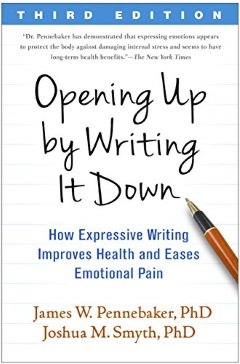
- Dr. Pennebaker's research (reported in his book "Opening Up: The Healing Power Of Expressing Emotions") has shown that writing about traumatic memories reduces the number of medical visits among those who do so. So, of all of the anger management activities out there, this one may offer the most overall health benefits. Read more about this research.
- An article in Science Daily magazine (April 13, 1999) entitled, "Writing Your Feelings: Good Medicine For Chronic Conditions" shows that Asthma and Arthritis patients who wrote about their feelings from stressful events showed improvement in their conditions.
Even though storytelling and writing about your feelings are not what you would usually consider as anger management activities, I assure you they are.
Why does this work? Because you are your own best anger management resource, and when you do this writing according to these guidelines, you're tapping into that resource.
Tell Your Story On This Website
All you have to do is go to this page and choose a category for your story or question. Then, if selected, your contribution will become a web page, that you and your friends and family can visit, and other visitors can read and benefit from.
Many people have helped and been helped in this way!
Here are some contributions and comments from visitors who have told their story, asked their questions and received the help they needed:
- "I realize how important it is to express. Let me tell you frankly that I've never shared my issues like this before and I feel pretty light now." Mrs. LL, Tamilnadu, India - Read her story: My Anger Is A Ruin In My Life
- "Well I have stopped drinking...almost 45 days sober. I am proud of myself. I just want to be a much better person, wife and mother." Tammy Otis, Oshawa Ontario Canada - Read her story: My Anger Problem
- "Your site and blog on anger management has definitely helped me at least figure out my anger issues and work on them. I still have my anger outbursts but I am preparing myself every day to tone the effects down further." A Mother - Read her story: This Site Has Helped Me As A Mother
Please click on the above links to read these people's stories. Writing your stories and asking your questions are anger management activities that will help you heal and become the person you want to be.
Trauma Writing
Working On Your Story So It Doesn't Work On You
This is where you explore the wiring behind your hot buttons. All you have to do is write about your memories of being hurt, abandoned, violated, neglected or abused in any way for periods of 15 minutes at a time, until you start feeling some relief.
Here is what I recommend:
- Make a list of all of the times you can remember being hurt, betrayed, neglected, abandoned or abused.
- Take each event, one by one, and "tell the story," keeping in mind that no one has to read this but you. The benefit is in the brain processes you activate in the writing process.
- Write about everything you felt, perceived, thought and experienced. Also write about the people you loved the most, and who loved you. Include your happy experiences, because often your greatest trauma is connected with that.
- Focus on yourself, and don't get caught up in analyzing, explaining or excusing the actions of others. This is for you, and nobody else.
- Write for 15 minutes (minimum) at a time, until you feel you've told the whole story, then move on to the next one.
- Strong emotions might come up as you do this. I highly recommend you use the Nurturing Your Inner Child book or audiobook to help you with the emotional healing that you need.
When you're done with these six anger management activities, you may or may not want to share any of this with a trusted friend, confidant or counselor. You will know what you need to do when you get to that point. Chances are you will just feel better from these easy, do-it-yourself anger management activities!
Getting Your Anger Out On Paper
And Other Anger Management Activities
Journaling directly from your anger is one of the best anger management activities of all. Here's how it works:
- Let your anger speak uninterrupted. That is, don't be reasonable, rational or "nice" during this process, or you won't really be getting the anger out.
- The purpose is to honor your anger as a valid emotion designed to protect you, while claiming authority over it by speaking consciously, intentionally from it.
- Usually when your anger "speaks" it's because you've lost control, and it is destructive. This type of activity puts you in control, where you are expressing all of those angry feelings in a healthy, therapeutic process where nobody gets hurt.

- Keep this writing in a separate journal from other writing. It's a kind of "dumping ground" for these negative emotions.
- Write about all of your frustrations, fears, pains, sorrows and anger here. All of the things you "just can't stand," and that really "push your buttons."
- The trick for this particular one of the anger management activities is to keep writing until you a) start to repeat yourself, b) can't think of anything else to say, or c) feel a sense of release and/or relief.
- Close the journal, and go straight to the next journaling exercise described below.
Goodfinding
The Practice of Gratitude, Appreciation and Optimism
Last but not least among these anger management activities, is the practice of Goodfinding. This is best done through a type of positive journaling (watch the video), which is extremely beneficial for shifting from anger, frustration and worry into a better mood and attitude.
I strongly encourage you to use this exercise to shift your thinking in a positive direction.
Every day, no matter what, write in your journal in these three ways:
- Gratitude for the things in your past: Write about all that you can think of that you are grateful for. Think of times when you've been very happy, people who have loved you, and wonderful places you've been. Focus on how grateful you are for the good times with friends, the concerts, art and beauty you have seen.
- Appreciation for the things in your present: Write about all that you appreciate about yourself and your world right now. Appreciate your health--all the organs and functions that are working just fine, your talents and abilities. Appreciate your possessions, your home, your friends and family.
- Optimism about your future: Write about what you look forward to. Think of all of the good things that are possible in your future, and think about how you would feel if they all happened. Use your imagination to think of good things coming your way. Keep your mind at least partly open to these imagined wonders becoming real.
Watch the video below to get an understanding of this journaling process and how it can help you!
So here's the ongoing advice...keep journaling. It's a great way to keep your thoughts and feelings sorted out, and as you've read on this page, it could also help you with physical health issues!
Have A Great Story Or Question
About Anger Management?
Whether it's shocking, funny or infuriating, we'd like to hear your stories and questions about anger management.
You have questions or stories to tell, or you wouldn't be on this site. If you'd like some help, you can get help here. You may feel helped just by writing!
Also, other visitors might be able to help with their comments, stories and questions. Sometimes I (Dr. DeFoore here) offer comments, and I try to answer most of the questions.
Feel free to also review our FAQ page (frequently asked questions), to see if your question has already been answered.
Other Visitors' Stories And Questions
Click below to see contributions from other visitors to this page...
A Never Ending Race Of Trying To Free Myself 
It was my first year in college. I was in a relationship with a girl called Karen. At first it was good. Then a little bit of negativity was taking place …
Violent Past Affecting My Present?
I was raised in a violent home with domestic abuse against me by my father and mother. I do also remember some abuse between my parents.
The hitting …
Angry To The Point Of Self-harm
I married a man who had 2 children. Their mother died when they were 4 and 6. They were 6 and 8 when I met them.
Their father tricked me into marriage. …
I Feel Like I Am Out Of Balance With My Relationship Patterns
I come from a very religious household. The bible was always used in hurtful ways to cause guilt, shame and crying by my parents. They also had issues …
The Story Of My Life
My story starts when I was a 4 months old baby and my parents decided to send me to live with my maternal grandparents. My parents were working long shifts …
I Should Never Have Been Born
My story is no worse or better than anyone else's; my pain is no greater and my situation is no harder; but I should never have been born. Why? Because …
Hilarious "I Statements" In Communication Efforts Not rated yet
Anyone who's been around the psychological block has heard of the communication technique of using "I statements". I remember a family member's hard …
Fits Of Anger Throughout My Entire Life Not rated yet
I am 72 years old and married for a second time after my first wife passed away. My first wife and I raised three boys but life wasn't easy because of …
My Husband's Doctor Told Him He Couldn't Control His Anger And Put Him On Medication Not rated yet
My husband and I have been married 8 years. His anger has caused problems between us, the children and some friends. He went to one therapy session and …
Stuck On Little Things Not rated yet
I'm young, only 19. But since I was a little girl, I have always had very bad anger problems. I used to beat up my sister so bad I hurt thinking back on …
- Home
- Anger Management Tips
- Anger Management Activities
We receive commissions on Amazon sales on this website.


Subscribe To The Newsletter
And Get A Free Ebook!
Recent Articles


-
Am I Somehow Deserving Of The Abuse?
Oct 16, 23 08:44 AM
 Dear Dr. DeFoore, I have been married for over 6 years and my relationship has become unrecognizable and full of resentment and hatred. Over the last
 -
The War In My Mind Or My Reality?
Jul 13, 23 09:08 AM
 I share my short story of endurance with triggers of my past military wounds to help heal myself and others. To inspire you to believe in yourself and
 -
Completely Confused By 20 Year Old Son's Behavior
Jul 06, 22 08:59 AM
 My son is 20 years old. He is extremely intelligent. He excelled in school and was at the top of his high school senior class. He was accepted into every
New! Comments
Have your say about what you just read! Leave me a comment in the box below.